

The Art of Craftsmanship
Drawing on the folk traditions and knowledge of ancient Turkmen weavers, we have restored the complete carpet-making cycle according to traditional techniques. This process is used exclusively for the creation of El Darak’s collector-grade carpets.
Discover Collector-Grade Rugs

Selection of sheep
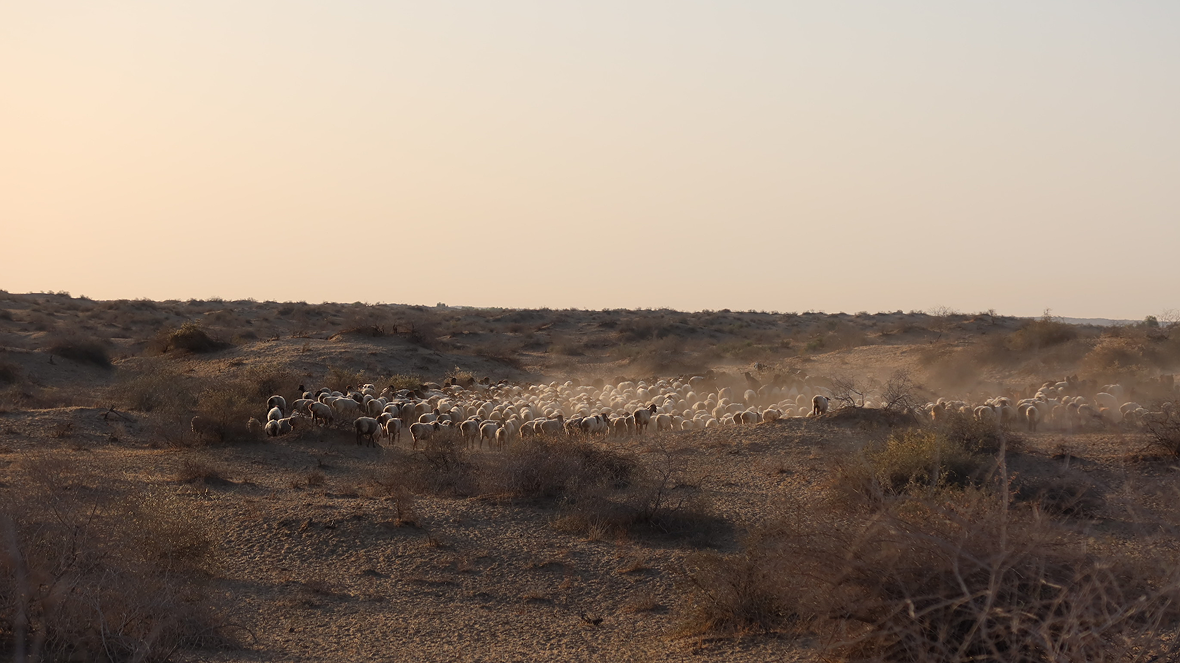
The process begins with the careful selection of sheep. El Darak uses wool from the Sarajin breed, prized for its exceptional strength, elasticity, and subtle inner luminosity. These sheep were developed in southeastern Turkmenistan through a folk method of selective breeding, based on generations of meticulous selection from local fat-tailed (Pendin) sheep. The breed derives its name from the village of Saryja, near the city of Mary. Shepherds ensured that the animals’ fleece consisted predominantly of fine undercoat, breeding only individuals exhibiting the highest wool productivity within the flock.
Sarajin rams and ewes are exceptionally resilient and hardy, capable of thriving in extreme climates — with summer temperatures reaching up to 40°C (104°F) and harsh winters typical of Turkmenistan. The breed is particularly well-adapted to year-round grazing in the Karakum Desert and the foothills of the Kopetdag mountains. Wool for El Darak carpets is harvested during the spring shearing, when fibers are at their longest and strongest. Spring-sheared Sarajin wool is non-exportable and represents an essential raw material for producing El Darak’s most exquisite and collector-grade carpets.
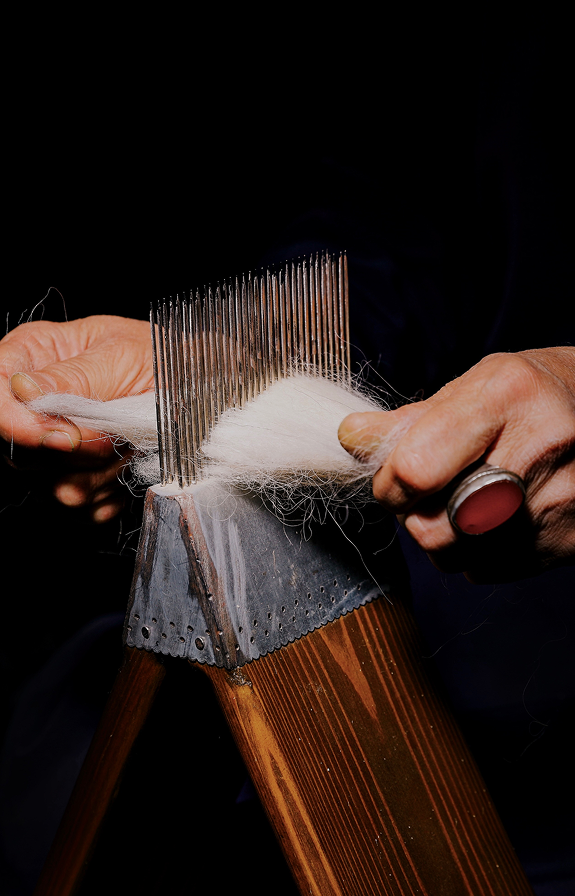
Hand-carding
After shearing, the wool is washed in multiple basins until the water runs clear. The water in the basins is warmed by the sun, as this washing takes place during the hot summer months. Once the wool has been preliminarily washed and dried, it is manually teased to prepare it for carding.
The wool is then carded using a special hand comb, known as a darak, and rolled into slivers. At this stage, the wool is carefully sorted for different components of the carpet: warp, weft, and knotting threads. Long, coarser fibers are selected for the warp; medium-length fibers are reserved for the pile yarn; and the finest wool from lambs is used for the weft.
Hand-spinning
Samuel Martinovich Dudin, the Russian ethnographer and one of the founders of the Ethnographic Museum in Saint Petersburg, noted:
"The yarn was produced with exceptional care to ensure uniform twist and thickness along its entire length, and in this respect, Turkmen women achieved results almost comparable to machine-made yarn."
Each spinner produces no more than 200–250 grams of yarn per day, while a small carpet requires approximately 12 kilograms.
Yarn Formation
After spinning, two tightly spun threads are twisted together using two spindles to form a strong double thread. The weft thread consists of two loosely spun threads twisted together, while the pile threads are made of a double, loosely spun yarn. Warp threads are carefully selected based on both thickness and degree of twist. It is essential that all warp threads for a single carpet are spun by the same spinner, as each spinner has a characteristic twist and tension unique to her technique.
Natural dyeing
Once the threads are prepared, the dyeing process begins, which can extend over five to six months, depending on the desired color. This is arguably the most labor-intensive stage in the creation of a “traditional” carpet. In the past, the key to successful dyeing was a properly conducted fermentation process.
This technique ensures the diffusion of pigment deep into the wool fiber, directly into the cortex beneath the protective scales of the cuticle. The spaces between the scales, filled with lipid secretions, prevent the dye from penetrating; only after their removal does the cortex become accessible to the mordant. To increase cuticle permeability, the wool undergoes fermentation using lactic acid mold, which hydrolyzes the lipid secretions over approximately three weeks, promoting an even distribution of pigment.
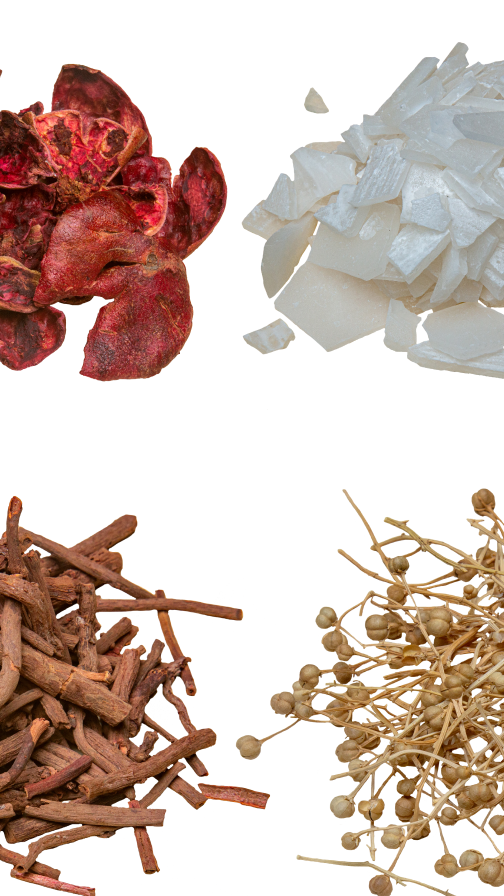
One of our greatest achievements has been the restoration of the plant-based color fixation technique. This process requires precisely measured proportions of each component: any deviation may compromise the fiber’s natural mechanical properties, making it brittle and prone to damage.
For natural dyeing and color fixation, we use plants that grow in the sands of the Karakum Desert and the foothills of the Kopetdag mountains. It is worth noting that all plants used in the dyeing process possess medicinal properties. The deserts of Turkmenistan are home to approximately 1,300 plant species, contributing both to the aesthetic and the cultural significance of the carpets.
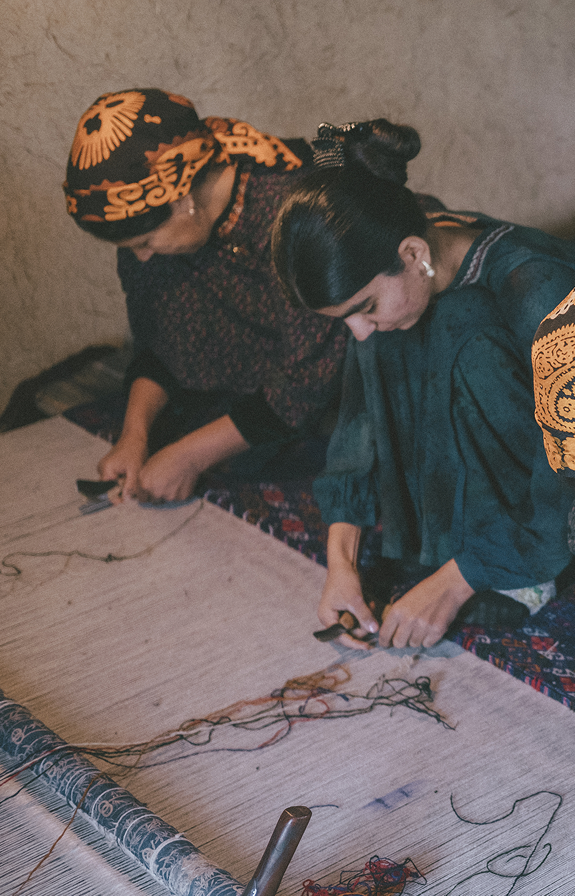
The carpets are woven, just as in ancient times, on horizontal looms.
For the nomad, the only reality shaping the order of the world was Nature. We take pride in being part of a sustainable production process, contributing in our own way to both environmental stewardship and the preservation of cultural heritage.